Showing posts with label Wood. Show all posts

Wood exporters to cope with tougher rules
wood

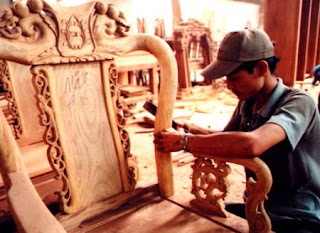
Vietnamese timber and wood product exporters will have to develop an elaborate system to ensure the legality of materials used to avoid the risk of losing their footholds in key markets like the US and the EU

For instance, they would need to show they have procured wood from areas with approved forest management plans and appropriate cutting permits.

They would also need to ensure they are excluding illegal and other unwanted wood both at the forest where materials are acquired as well as at processing and manufacturing facilities.

These steps become necessary as the EU and US markets are set to toughen up import restrictions through the European Union Timber Regulation and the United States Lacey Act, a workshop held in HCM City heard yesterday.

The workshop presented participants with the salient features of the two pieces of legislation as well as with practical steps that would help reduce the business risk of illegal materials entering the supply chains.

The Forest Trust (TFT) and the Handicraft and Wood Industry Association of HCM City (Hawa) organised the workshop with support from the United States Responsible Asia Forestry and Trade (RAFT) programme under USAID.

The organisers said the steps outlined at the workshop would help local exporters gain market credibility.

Read More

Wood producers want govt to check plywood smuggling

plywood

Wood producers are calling the Department of Trade and Industry's (DTI) attention regarding the illegal importation of plywood from China, saying the product is threatening the businesses of local producers and the safety of consumers.

Smuggled plywood, the Philippine Woods Producers Association (PWPA) said in a press conference on Tuesday, is only 4.5mm thin but often marketed to be 5mm thick. Chinese plywood is also unable to handle sanding and contains glue with high formaldehyde emissions, endangering those who work with the material, it added.

The Chinese version sells at a lower price and has forced local producers to lower their own prices in order to compete with the smuggled plywood.

"This is a coy attempt at tricking consumers who are usually naive of the existence of such standards. It also robs the government of unpaid VAT and import duties amounting to about P76 to P80 million monthly for 400 forty-foot container vans. These illegal imports unfairly compete and undercut the prices of local plywood manufacturers," said PWPA deputy director Maila Vasquez.

Read More

Fires no place for treated wood

Treated Timber

All right folks, it's time to 'fess up. No names mentioned, but you know who you are.

Those of you burning treated timber in your home fires have been spewing toxic fumes into Nelson's air. And Nelson City and Tasman District councils want you to stop.

In case you haven't heard, CCA-treated timber contains chrome, copper and arsenic. When the timber is burnt, most of the arsenic goes up the chimney and into the atmosphere attached to minute particles.

The rest of the arsenic is left in the ash, along with the residual chrome and copper, and is, according to Institute of Geological and Nuclear Science Wellington-based scientist Perry Davy, "not what you would want to be putting on your garden".

Dr Davy's findings of spikes in atmospheric inorganic arsenic during the winter of 2009 at Tahunanui monitoring sites were drawn from air quality monitoring work commissioned by the Nelson City Council.

The Tahunanui monitoring is part of the council's programme to understand, manage and improve air quality in the region. To meet new national standards in 2008, the council introduced its air quality plan, aimed at making a 70 per cent reduction in superfine particulate emissions, 80 per cent of which was identified as originating from domestic fires and wood burners.

Suspecting people were burning treated timber on their fires, Dr Davy looked at arsenic levels in three locations around the country already being monitored by GNS for air quality – Auckland, Wainuiomata and Tahunanui – and found dramatic increases in levels during winter in all three, consistent with the main fire-burning period.

In the Tahunanui case, he found levels of arsenic around 40 times greater in winter (spiking many times from May to September during 2009) than during January of the same year when levels were almost nothing.

Read More

Madagascar battles exotic timber felling


Authorities in Madagascar say logging of precious woods persists in its forests despite a 2010 decree banning logging, transporting and export of such woods.

Police seized 30 tons of rosewood being transported in two trucks last month in Antalaha, on the northeastern coast of the country where the problem is most acute, Inter Press Service reported last week.

Three trucks transporting 115 rosewood logs were intercepted in the southeast of the island a few days earlier, and more than 1,000 pieces of another kind of precious rosewood found in Malagasy forests have been seized in the same region.

Madagascar has the biggest rosewood reserves in the world.

Read more:

The beauty of a vinyl record

Vinyl

While our society has begun to fully enter the digital content stage, it's good to get a reminder of what the world was like before the Internet existed. Over Easter vacation, I opted to stay with a good friend of mine in Orange County rather than make the tedious journey back to the east coast. As an avid music fan herself, my friend suggested that we visit a record store in Laguna Beach called the Sound Spectrum.

Now, if you have not listened to my USDRadio program, read any of my previous columns or met me in person, you probably do not understand my deep seeded and, honestly, pretty extreme love of music. When I walked into the Sound Spectrum, I felt like I was in heaven. The walls were plastered in posters of the Grateful Dead, Bob Marley and The Beatles. The racks were filled with an excellent assortment of used CDs (my friend actually found the incredible album "Dylan and the Dead," which I highly recommend), posters, accessories and T-shirts. The sign outside read that the store had been open since 1967. The friendly man at the counter, who happened to have impeccable taste in music, was friendly, helpful and just as excited as my friend and I at our discoveries.

Small, independent record stores like the Sound Spectrum are a dying breed. Though larger stores, like the famous Amoeba stores in Los Angeles and San Francisco (I found the relatively rare vinyl addition of Little Feat's excellent live album "Waiting for Columbus" at the L.A. location), still manage some success, it is relatively rare for anyone, including intense music fans, to possess hard copies of albums they love. Artists and record companies struggle to keep CDs relevant, sometimes resorting to adding extra features like videos to the package, which, in most cases, are pretty superfluous and can be found just as easily online for free.

This is where Record Store Day comes in. Each year in mid-April, many major artists release vinyl editions of rare recordings, concerts or collaborations exclusively available in record stores like the Sound Spectrum. If you were at Coachella, you may remember the Zia tent that also offered Record Store Day offerings and artist signings over the weekend to celebrate the musical holiday. Not only did I get to meet one of my favorite folk artists, the Tallest Man on Earth, but I also helped to support him through the purchase of a hard copy of his newest EP.

Read More

Get Ready For Timber 2011 Expo

timber expo 2011

Hardwood timber is big in Pennsylvania. That's why the nation's largest hardwood-producing industry will host Timber 2011 at Rock Springs, Pa. on June 3 and 4.

Formally known as the Pennsylvania Forest Products and Technology Expo, the event promises to put attendees "in the driver's seat" with hands-on demonstrations of state-of-the-art machinery. As many as 100 commercial exhibitors will be aiming for loggers, sawmill operators, value-added processors and forest landowners in the Northeast.

The bi-annual expo is hosted in partnership with Penn State's College of Ag Sciences and School of Forest Resources. The event will be held at the Ag Progress Days site at Rock Springs, on Pa. Route 45, nine miles southwest of State College.

Timber 2011 is an opportunity for forest products companies to hone their business skills, learn about the latest production practices and see new technology, says Penn State's Bob Oberheim, the show's manager. At this show "you can learn about the latest technologies, production methods, business practices and regulations," he adds.

Workshops will cover topics such as the proposed National Hardwood Check-off Program, equipment safety and business management issues.

Indoor and outdoor exhibits will include trucks, trailers, forklifts, plus equipment for land owners, loggers, lumbermen, sawmills, wood processors and pellet manufacturers. Exhibits also will include feller bunchers with cut-to length processor heads, forwarders, log skidders, landing loader and slashers, whole-tree chippers, walking floor trailers, sawmill equipment and firewood processors, plus horizontal grinders, chippers and shavers

Read More

Preserving wood in Mississippi's climate

Treated Timber

The climate of Mississippi and the Gulf South region presents challenges for wood preservation, making water repellents and the environment top considerations.
David Jones, assistant Extension professor in Mississippi State University's forest products department, said wood treatments can lengthen the performance of timber by decades.

"If we placed an untreated telephone pole in the ground, it would last two or three years. A treated pole will last two or three decades," Jones said. "The time to consider treatments is before the wood is in place, especially if it will be in water."

Mississippians use wooden pilings and decking extensively from the salt waters of the Gulf to the lakes, ponds and rivers throughout the state.

Even away from bodies of water, the state's humidity and rainfall can take a toll on the life expectancy of wood products.

Read More

Greenwood Management Reveals New Teak Plantations

Teak Plantation

Greenwood Management has announced it is introducing a new product to its range of timbers grown in Brazilian plantations.

The firm will soon be growing a new species of timber to add to those already included in its forestry investments product range, which includes the Eucalyptus, the Black Wattle (Acacia) and Guanandi species.

The new species is semi-matured to matured Teak trees, all to be grown on plantations. Teak timber, well known for its strong grains and texture, is often used in the carpentry trade and the manufacture of furniture for boat decks, due to its high weather resistance.

A spokesperson from Greenwood Management explained that returns on investment in the Teak business are expected to be strong: "Investments are available up to eight years with returns predicted at 12 per cent per annum."

Although the management rotations for the growing of Teak were traditionally 80-100 years, this has been reduced to between 20 and 25 years for the commercial production of the wood.

Read More

Preserving wood in Mississippi's climate

wood

The climate of Mississippi and the Gulf South region presents challenges for wood preservation, making water repellents and the environment top considerations.
David Jones, assistant Extension professor in Mississippi State University's forest products department, said wood treatments can lengthen the performance of timber by decades.

"If we placed an untreated telephone pole in the ground, it would last two or three years. A treated pole will last two or three decades," Jones said. "The time to consider treatments is before the wood is in place, especially if it will be in water."

Mississippians use wooden pilings and decking extensively from the salt waters of the Gulf to the lakes, ponds and rivers throughout the state.

Even away from bodies of water, the state's humidity and rainfall can take a toll on the life expectancy of wood products.

"Wood can be degraded by a variety of factors including biological factors, mechanical means, fire, sunlight, and chemicals," Jones said.

Read More