Risk of Epilepsy Measured, May Be Still Higher

One in 26 Americans will develop epilepsy at some point in their lifetime, according to a population based research.

Lifetime risk up to age 50 was 1.6% and rose to 3.0% at age 80, Dale C. Hesdorffer, PhD, of Columbia University School of Public Health in New York City, and colleagues reported in the Jan. 4 problem of Neurology.

Given the recent U.S. population, nearly 12 million individuals (3.9%) can be expected to develop epilepsy in their remaining lifetime, the researchers forecast based on their findings from the population of Rochester, Minn.


Woodland strawberry genome sequenced


The genome of the woodland strawberry, cousin to today's cultivated strawberry, has been sequenced by a worldwide research consortium. It is the second smallest plant genome sequenced, with just 14 chromosomes, and could help breeders create tastier and hardier varieties of the famous berry as well as other crops in its family, which includes almonds, apples, peaches, cherries and raspberries.

The research is in this week's online edition of the journal Nature Genetics.

"We've created the strawberry parts file," the leader of the International Strawberry Sequencing Consortium, Kevin Folta, at University of Florida, said in a release "In the old days, we had to go out and figure out what the parts were. Now we know the components that make up the strawberry plant."


8 Benefits of Home Cooking

When it comes down to feeding your body and mind, nothing is superior to preparing your food from scratch, with quality ingredients and served with love. If you have never experienced this phenomenon then try it out for 90 days and see how you feel.


• Saves money

Packaged and prepared meals cost you considerably more than cooking with raw ingredients at home. Preparing meals at home can save you money.

• Saves time

In the time it takes to drive to a restaurant, place your order, wait for your order, return home and serve the meal, you could have made a three-course meal from scratch with time to sit and chew slowly.

• Less salt and Trans fats

preparing meals at home allows you to control the amount of salt and oils you use in your recipes. This in turn reduces the possibility of weight gain and clogged arteries.

• Balanced meals

Taking the time to plan your weekly menu not only helps to save time and money, but also provides a way to create meals with a balance of protein, carbohydrates and fat, plus all the essential vitamins and minerals needed for the adult and child’s body. When eating balanced meals your body feels satisfied, has fewer cravings and this in turn prevents late-night snacking.

• Avoid food poisoning

According to the Center for Disease Control (CDC) 76 million people are poisoned by food each year. This is caused by food-borne pathogens such as bacteria, viruses and parasites that can seriously harm or even kill you. When preparing meals at home you can better control the temperatures when cooking meats, keep hands and countertops clean and properly wash your raw produce.

• Better energy

Food can be healing medicine or it can deplete your energy and cause sickness and pain. In Cook Your Way to the Life You Want, Christina Pirello writes that we run a risk by having someone else prepare all our meals.

• Brings family together

Preparing meals at home and including family members in meal preparation is a way to give and share love. When food is prepared with a calm mind and loving thoughts it can become a tonic for both the physical body and the soul.

• Weight control

with larger portions people tend to eat more, but cooking at home allows you to control serving sizes and prevent overeating. Buy locally, in season, the best quality food, organic when possible. When cooking from scratch you know exactly what is going into your recipes. The choices you make can keep you healthy and help prevent weight gain, digestive troubles and allergic reactions.

Californians Are Smoking Less and Less

Californians smokes less than most other Americans.

According to a research released previous week by the California Department of Public Health, just 13.1 percent of California residents reported smoking last year, compared with 20.6 percent nationally.

California currently has the second-lowest smoking rate in the country, trailing only Utah.

The declining rate here reflects a culture that is particularly conscious of health and the environment, and it was hailed by state officials as evidence of the success of a strategy to demonize smoking.


Nasal congestion, a sign of severe asthma

A new research has suggested that nasal congestion can be a sign of severe asthma.

This means that healthcare professionals should be additional vigilant when it comes to nasal complaints.

Furthermore, more severe asthma appears to be more regular than previously thought, reveals a study from the Sahlgrenska Academy's Krefting Research Centre.

The population research included 30,000 randomly selected participants from the west of Sweden and asked questions about different aspects of health.


Whole-Fat Dairy Products May Lower Type 2 Diabetes Risk: Study

New study suggests that whole-fat dairy products generally shunned by health experts contain a fatty acid that may lower the risk of type 2 diabetes.

The fatty acid is called trans-palmitoleic acid, according to the study in the Dec. 21 issue of the Annals of Internal Medicine, and people with the highest blood levels of this fatty acid decrease their odds of diabetes by 62 percent compared to those with the lowest blood levels of it.

In addition, "people who had higher levels of this fatty acid had better cholesterol and triglyceride levels, lower insulin resistance and lower levels of inflammatory markers," said research author Dr. Dariush Mozaffarian, co-director of the program in cardiovascular epidemiology at Brigham and Women's Hospital and Harvard School of Public Health.


Garlic protects against hip osteoarthritis


Women who consume a diet high in allium vegetables, such as garlic, onions and leeks, have lower levels of hip osteoarthritis, suggests a latest study.

The findings, by researchers at King's College London and the University of East Anglia, not only highlight the possible effects of diet in protecting against osteoarthritis, but also show the potential for using compounds found in garlic to develop treatments for the situation.

A relationship between body weight and osteoarthritis was previously recognised, although it is not yet totally understood. This study is the first of its kind to delve deeper into the dietary patterns and influences that could impact on development and prevention of the condition.

Human Hemoglobin May Turn Staph Aureus Bacteria Deadly, Researchers Find

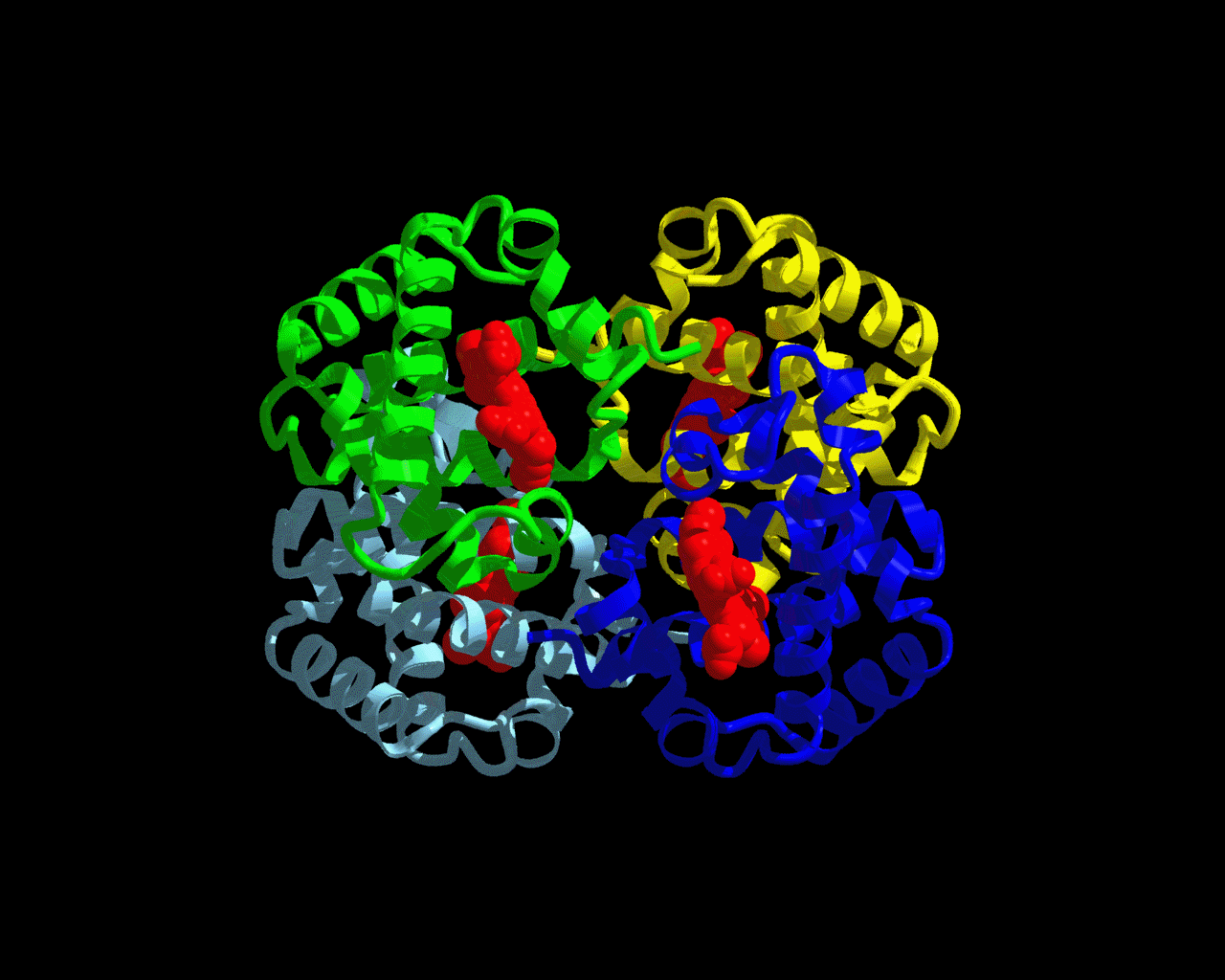
Human hemoglobin, the oxygen carrying protein in red blood cells, is the most efficient fuel for Staphylococcus aureus infections, according to a study that may help clarify how the bacteria homes in on certain patients with deadly consequences.

Hemoglobin also contains the iron needed for bacteria to develop and spread. Researchers led by Gleb Pishchany from Vanderbilt University Medical School’s microbiology department showed in laboratory testing how Staph aureus latches on more simply to hemoglobin from humans than other mammals to cause invasive infections.


Exercise prevents middle-age weight gain


A new research has revealed that young adults, mainly women, who maintained high levels of moderate and vigorous activity over a period of 20 years experienced smaller gains in weight and waist circumference during the transition from young adulthood to middle age, compared to individuals with lower activity levels.

Arlene L. Hankinson, of the Feinberg School of Medicine, Northwestern University, Chicago, and colleagues conducted a research to evaluate the relationship between maintaining higher activity levels and changes in body mass index (BMI) and waist circumference over 20 years in youthful adults.


Low-Sugar Cereals Help Kids Eat Healthier

Children are more likely to eat a nutritious, balanced breakfast if they give low-sugar cereals, even if they add a little table sugar to their bowls, a new study says.

Though children may favor cereal that’s high in sugar, they’re more likely to eat fruit at breakfast when served a cereal containing less sugar, researchers say.

The research observed what 91 children aged 5 to 12 at a summer day camp ate when served either high-sugar or low-sugar cereals.


Stem Cells Used to Make Pancreas, Gut Cells

Stem cells can be transformed into the pancreatic cells needed to treat diabetes and into difficult layers of intestinal tissue, scientists demonstrated in two experiments reported on Sunday.

In one, a team turned immature sperm cells into pancreatic tissue, while another group turned embryonic stem cells into complex layers of intestinal tissue.

Both studies show latest ways to use stem cells, which are the body's master cells and which can come from a variety of sources.


Chronic Lyme disease: A dubious diagnosis

Dr. Bernard Raxlen arrived at Manhattan's glamorous Gotham Hall on a cool autumn night in 2008 to get a humanitarian award.

With a lime-green Lyme disease advocacy ribbon pinned to his dapper black suit, Raxlen joined partygoers sipping martinis below a stained-glass skylight bigger than most New York City apartments.Money was in the air. The "Unmask A Cure" gala invitation listed Goldman Sachs, New York Private Bank & Trust and Marquis Jet as sponsors. The event increased money for the Turn the Corner Foundation, a Lyme nonprofit on whose medical advisory board Raxlen sat.

The scene was light-years from the institutional brick building where the Connecticut Medical Examining Board was considering disciplinary action against Raxlen for the fourth time in 10 years. Raxlen had been accused of telling a lady dying of Lou Gehrig's disease that she had chronic Lyme disease, an illness that might not even exist.


Heart trouble? Blood test to tell years in advance

A new blood test may be able to tell whether a seemingly strong person is at risk of dying from heart disease , US researchers said.

An older , less sensitive version of the test detects a certain protein in only a small percentage of people ,but a research of the newer test made by Roche found it in about 25% of 3,500 blood samples .And people who had detectable levels of the protein , released by damaged heart muscle , were nearly seven times more likely to die of heart disease within six years.

Both tests look for a protein called cardiac troponin T, which indicates muscle damage in the heart , but the newer test called Elecsys Troponin T is 10 times more sensitive . "This test is among the most powerful predictors of death in the common population we've seen so far ," saidJ amesdeLemosof theUniversity of Texas Southwestern Medical Center in Dallas , whose study appears in the Journal of the American Medical Association .


Shellfish may help preserve seniors' eyesight

Eating foods rich in omega-3 fatty acids, such as salmon and tuna, seems to be fine for not only the heart and mind but the eyes. A latest study adds shellfish to that group. It found that seniors who ate at least one serving a week of fish or shellfish high in omega-3s reduced their risk of developing advanced age-related macular degeneration, a disease that affects vision, by 60 percent.

The findings are consistent with mounting proof that high levels of dietary omega-3 fatty acids benefit eye health, the researchers said.

"But, unlike earlier studies, we included shellfish intake in the determination of omega-3 fatty acid consumption," said researcher Bonnielin K. Swenor of the Wilmer Eye Institute at John Hopkins University. "This is main because shellfish, particularly crab and oysters, are a main component of the diet" of the study population.


Brain Scan Might Someday Spot Autism

A kind of brain imaging that measures the circuitry of brain connections may someday be used to diagnose autism, new research suggests.

Researchers at McLean Hospital in Boston and the University of Utah used MRIs to analyze the microscopic fiber structures that create the brain circuitry in 30 males aged 8 to 26 with high-functioning autism and 30 males without autism.

Males with autism showed differences in the white matter circuitry in two regions of the brain's temporal lobe: the superior temporal gyrus and the temporal stem. Those parts are involved with language, emotion and social skills, according to the researchers.


Fat-fearing moms putting babies on diets

If you've ever wondered how crazy America's obsession with weight can get, look no further than this strange trend among some fat-fearing parents, mothers who put their babies on diets.

And I'm not talking about pudgy 10-year-olds who think Wii Fit passes for work out. I'm talking babies, under a year old, with chubby cheeks and folds in their thighs — you know, the kind most other people coo over as the picture of health.

According to a recent Good Morning America report, and some Mommy blogs, pediatricians around the country are finding that "more and more parents are putting their babies on diets," even diluting their nutrient-rich principle and breast milk with water, to keep them from getting "fat."

The fear itself is not far-fetched. Dieting babies come at a moment in America's ballooning child obesity epidemic when one in 10 children below the age of 2 is overweight, and experts have come up with a new term to describe the heaviest: "the super-obese," according to the ABC story. So parents today are more consumed than ever with their babies' girth.


New vitamin D recommendations


Despite mounting pressure to urge several Americans to sharply boost their vitamin D levels, latest government recommendations are not advocating a huge increase in the amount of the "sunshine vitamin" that people get.

The United States and Canada asked the Institute of Medicine, which is division of the National Academy of Sciences, to update the official vitamin D recommendations for the first time since 1997. A 14-member expert committee convened for the task concluded that most Americans and Canadians up to age 70 need no more than 600 international units of vitamin D per day. The elderly may need as much as 800, the committee concluded.

Before, experts called for children and younger adults get 200 international units a day, adults ages 50 to 70 get 400 and the aged to get 600. But a flurry of research indicating that vitamin D may have a dizzying array of health benefits, and that many people may have insufficient levels, had reignited an intense debate over whether federal guidelines were outdated, leaving millions unnecessarily vulnerable to heart disease, cancer, diabetes, infections and other ailments. Some doctors have begun routinely testing their patients' vitamin D levels and recommeding that people should routinely consume 2,000 or 3,000 international units a day. Sales of vitamin D supplements have raised sharply in recent years.


If you're around a baby, get whooping cough vaccine

Most Georgia infants get the vaccines they require to help protect them from pertussis -- a highly contagious disease better known as whooping cough.

While Georgia has not observed high rates of the disease so far this year, outbreaks in other states are prompting public health officials to say another time that a vaccine for the baby isn’t enough. They advise all adults and teens who come into contact with an infant to roll up their sleeve and get a vaccine, too.

The advisory applies not just to parents, but to adolescent siblings, aunts, uncles, grandparents and day care employees anyone who is going to spend time with the baby.

“What we want to have people do is make a cocoon of immunity around the infant,” said Jeff Diamond, a spokesman for the Atlanta-based Centers for Disease Control and Prevention.


More Protein, Fewer Refined Carbs May Keep Weight Off

If you've worked hard to shed those additional pounds and want to keep the weight off, a new Danish study suggests that you consider eating more protein and fewer refined carbohydrates.

Based on the findings, the researchers recommend consuming mostly what's known as low-glycemic index carbohydrates, such as whole-grain breads. The glycemic index (GI) is a measure of the ability of carbohydrates to raise blood glucose levels; those with a low GI cause blood levels to raise more slowly, explained Dr. Thomas Meinert Larsen, a co-author of the study, published in the Nov. 25 issue of the New England Journal of Medicine.

What is it about the high protein, low glycemic index carbohydrate diet that maintains weight under control? "Possibly a stronger satiating effect and more balanced blood sugar regulation," Larsen hypothesized.


Eating orange and dark green vegetables linked to longer life

This time no beta-carotene in vegetables that has the spotlight, but rather its cousin: alpha-carotene. Both are members of the carotenoid antioxidant family. Scientists trust carotenoid antioxidants promote health by counteracting oxygen-related damage to DNA.

Consumption of fruits and vegetables has long been associated with lower risks of health troubles such as cancer and heart disease, said Dr. Chaoyang Li of the U.S. Centers for Disease Control and Prevention, in Atlanta, in e-mail to Reuters Health.

However, it is still not understandable which elements contribute to the health effects or how they do so, he added, pointing to recent studies that have found no apparent benefit for beta-carotene supplements.

To investigate the merits of oft-ignored alpha-carotene, Li and his colleagues analyzed information on more than 15,000 people who were participating in the Third Nationwide Health and Nutrition Examination Survey Follow-up Study. All of them provided blood samples at the start of the study, along with other medical and lifestyle information.